
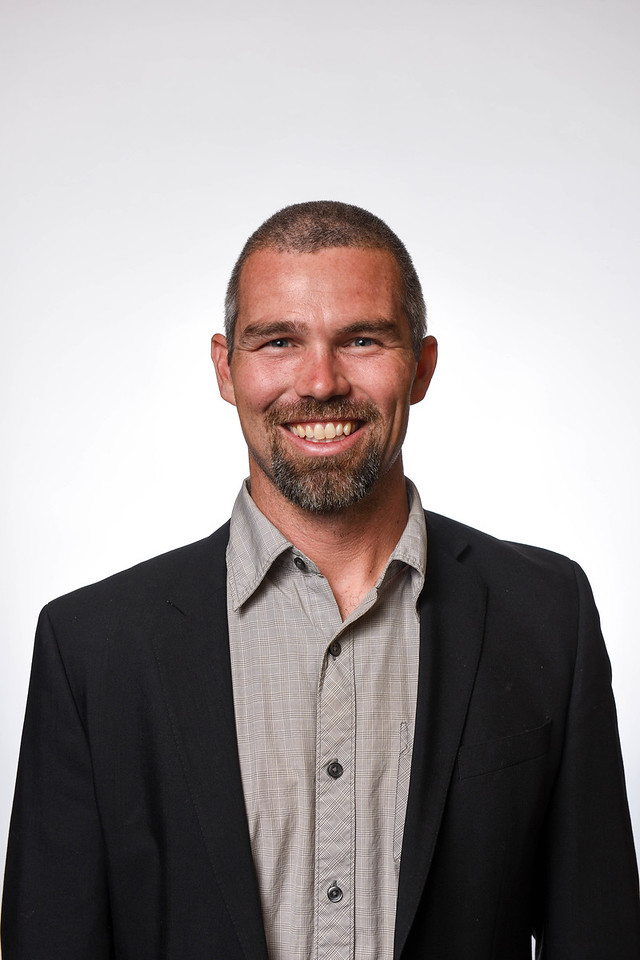
Kevin Tharp, PhD
Removing fibrotic barriers to improve immunotherapy responses in ovarian cancer
2026 Early Career Investigator Grant
Sanford Burnham Prebys Medical Discovery Institute
Project Summary
Tumors which do not respond to modern anti-cancer immunotherapies are defined by an overabundance of collagen. Evidence suggests that this is because the immune cells, which are required for these therapies to work, are physically excluded by a scar tissue-like collagen barrier (“fibrosis”) that encapsulates the tumor. While we know that this collagen barrier is deterministic for therapies, we don’t know how to remove it or how and why it forms. We will investigate and drug the unique metabolic pathways responsible for the synthesis of this collagen barrier to improve immunotherapies against recurrent ovarian cancers, which lack treatment options.
Bio
Dr. Kevin M. Tharp is an Assistant Professor at the Sanford Burnham Prebys Medical Discovery Institute in La Jolla, California, where he leads innovative research at the intersection of metabolism, mechanobiology, and cancer immunotherapy. He earned his Ph.D. in Metabolic Biology from the University of California, Berkeley in 2017, following a B.S. with honors in Biochemistry and Molecular Biology from UC Santa Cruz. His scientific journey includes pivotal roles at UC Berkeley and UC San Francisco, where he completed his postdoctoral training in the Weaver Lab, contributing extensively to our understanding of how mechanical stress influences mitochondrial function and immune regulation in fibrotic and tumor microenvironments. Dr. Tharp has been recognized with numerous prestigious awards, including an Early Career Investigator Grant from Ovarian Cancer Research Alliance and multiple fellowships from the NCI and ADA. He has authored over 50 peer-reviewed publications in top-tier journals such as Nature Cancer, Cell Metabolism, and Science Advances, and holds patents related to adipose tissue therapeutics. A dedicated educator and mentor, he has taught graduate and undergraduate courses in metabolism and cellular signaling, while also serving as a peer reviewer for high-impact journals and funding agencies. His current research focuses on overcoming fibrotic barriers in solid tumors to enhance immunotherapy efficacy.