
An index created at The University of Texas MD Anderson Cancer Center in Houston, based on protein biomarkers was able to discriminate between women at high risk and low risk for ovarian cancer recurrence, in a recent analysis. Such information can be used to help improve the treatment and, eventually, the prognosis of patients with ovarian cancer, who are at high risk for tumor recurrence. Read full article here.
Related Topics

OCRA Sponsors NCCN Guidelines for Cervical, Ovarian, and Uterine Cancer Patients
This article was updated in October 2026 to reflect NCCN’s release of the 2026 Guidelines for Ovarian Cancer Patients. OCRA is a proud sponsor of the 2026 Patient Guidelines for Ovarian Cancer, Cervical Cancer, and Uterine Cancer. We believe ensuring access to clear, understandable information is critical. NCCN provides wonderful guides for anyone newly diagnosed … Continued
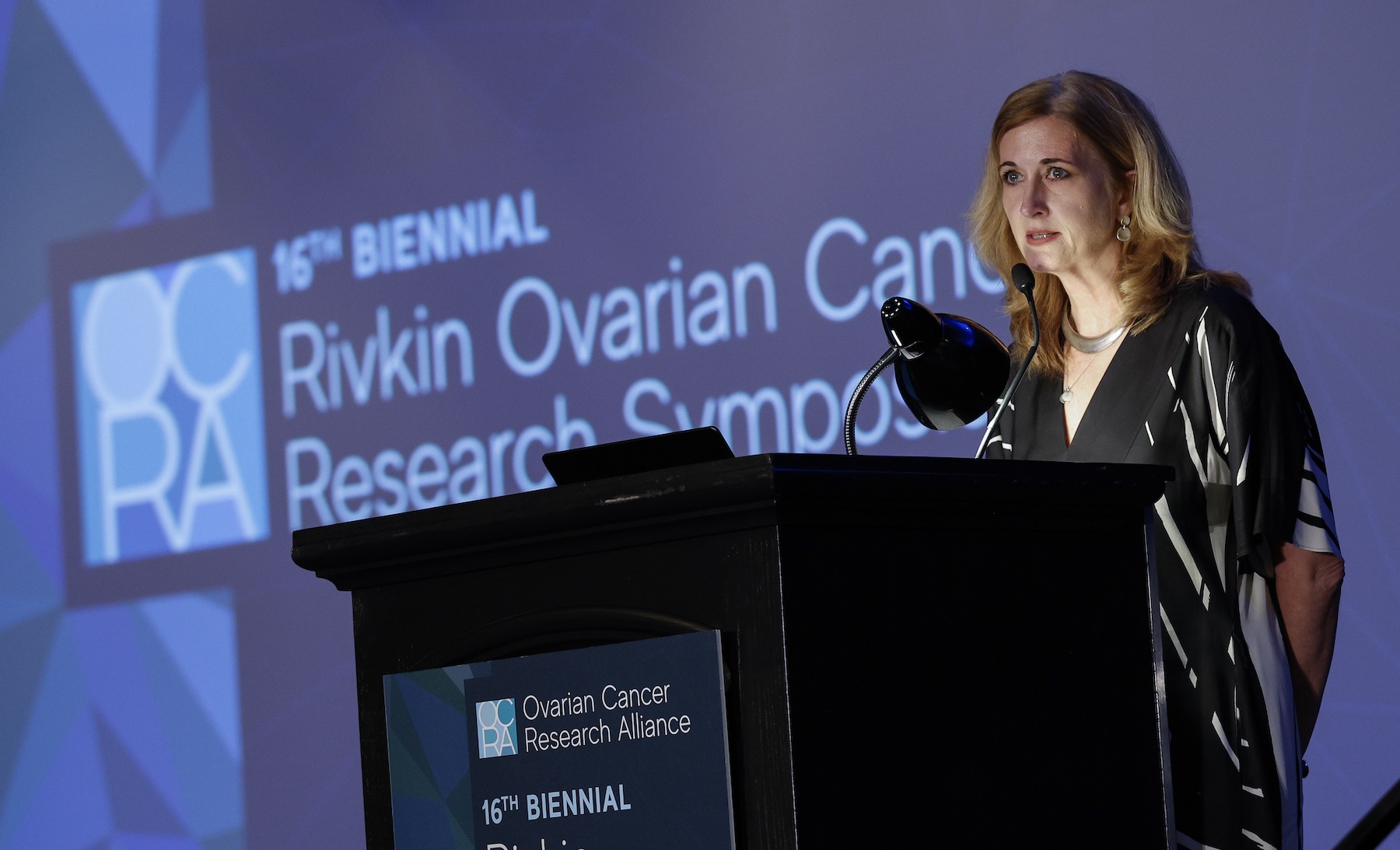
OCRA’s Rivkin Ovarian Cancer Research Symposium Convenes A Scientific Community Ready to Accelerate Progress
Researchers, clinicians, and advocates gather to share findings and build collaborations More than 375 researchers, clinicians, and advocates from across the ovarian cancer community gathered in Philadelphia for the 16th Biennial Rivkin Ovarian Cancer Research Symposium, presented for the first time by Ovarian Cancer Research Alliance (OCRA), from October 16-18. Founded in 1996 by the … Continued

The Overview: June 2026
Nearly 500 people have already registered for OCRA’s International Gynecologic Cancer Conference®—the largest conference dedicated to the gynecologic cancer community—taking place on September 16–17. The conference is free, online, and open to all, and will include programming for ovarian, endometrial, cervical, and rare gynecologic cancers. For the first time, each of these diseases will have a dedicated Ask the Experts session. Learn … Continued